How Long Does Grass Seed Take to Grow? (Complete Timeline)

Growing a new lawn from seed is one of the most rewarding things a homeowner can do — but it requires patience. One of the most common questions we hear at GardnWise is: how long does grass seed take to grow? The honest answer depends on several factors, but understanding the timeline will help you set realistic expectations and avoid unnecessary stress. Before you plant, make sure you’ve selected the right variety by reviewing our guide on choosing the best grass seed for your lawn.
Average Germination Times by Grass Type
Germination is the process where your grass seed cracks open and sends out its first root and shoot. Here’s what to expect:
- Kentucky Bluegrass: 14–30 days
- Tall Fescue: 7–12 days
- Perennial Ryegrass: 5–10 days (fastest to germinate)
- Bermuda Grass: 10–30 days
- Zoysia Grass: 14–21 days
- Centipede Grass: 14–28 days
- St. Augustine: Usually grown from plugs, not seed
Perennial ryegrass is the fastest germinator, which is why it’s often included in lawn repair mixes — it establishes quickly while slower grasses catch up.
What Affects Germination Speed?
Soil Temperature
This is the single biggest factor. Grass seed needs soil (not air) temperature to be in the right range:
- Cool-season grasses (fescue, bluegrass, rye): Best at 50–65°F soil temp
- Warm-season grasses (Bermuda, Zoysia): Best at 65–80°F soil temp
Planting outside these windows dramatically slows — or completely prevents — germination. Use a soil thermometer for accurate readings.
Moisture Levels
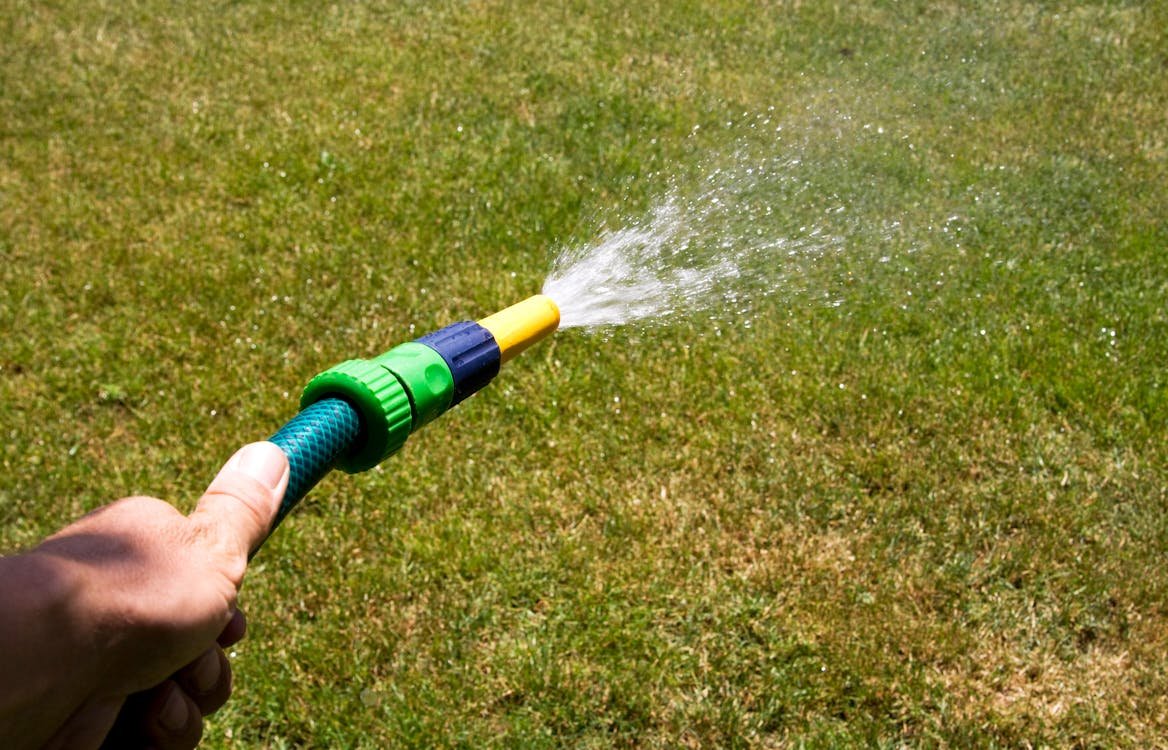
Grass seed must stay consistently moist throughout germination. This means light watering 2–3 times per day to keep the top inch of soil damp without washing seeds away. Missing even one day during germination can set you back significantly. Our complete lawn watering guide covers exactly how to dial in the right schedule for new seedlings.
Seed Quality and Age
Fresh, high-quality seed germinates faster and more uniformly. Cheap or old seed (over 2 years) has lower germination rates and may take longer to sprout.
Soil Preparation
Seeds that make direct contact with soil germinate better. Rake the area before seeding to break up clumps, remove thatch, and create a fine seedbed. For a full walkthrough of the process from start to finish, see our guide on how to plant grass seed.
The Full Growth Timeline: From Seed to Lawn
Understanding germination is just the first step. Here’s the complete growth timeline after seeding:
Days 1–7: Seeds absorb water and swell. No visible signs yet — this is when consistency is most critical.
Days 7–14: First sprouts appear (for fast germinators like ryegrass). You’ll see tiny green threads emerging.
Days 14–21: Most cool-season varieties show visible growth. The lawn starts looking fuzzy and green.
Days 21–30: Grass blades are 1–2 inches tall. Warm-season varieties are just beginning to show life.
Weeks 4–8: Significant growth. Cool-season grasses may be ready for their first mow.
Weeks 8–16: Root systems deepen. The lawn is filling in but still fragile. If you’re working to thicken an existing lawn rather than starting fresh, overseeding your lawn at this stage can dramatically speed up density.
6–12 months: A properly established lawn with a strong root system. Fully ready for normal foot traffic and care routines.
When Can You Mow New Grass?
Wait until your new grass reaches 3–4 inches tall before mowing — typically 4–6 weeks after germination. Set your mower to its highest setting for the first few cuts to avoid stressing the young plants. Never remove more than one-third of the blade length at a time.
Common Mistakes That Slow Growth
- Watering too infrequently: Seeds must stay moist. Miss a day and newly germinated seedlings die.
- Overwatering: Saturating the soil washes seeds away and promotes fungal disease.
- Mowing too early: Walking on or mowing immature grass uproots fragile roots.
- Wrong planting season: Cool-season grass seeded in summer heat will struggle badly.
- Not preparing the soil: Poor seedbed contact means slow, patchy germination.
Pro Tips to Speed Up Germination
- Soak the area well the day before seeding to give seeds immediate moisture
- Use a starter fertilizer with phosphorus to encourage root development
- Apply straw mulch lightly over seeded areas to retain moisture and protect seeds
- Check your soil pH — grass grows best in 6.0–7.0. Amend if needed.
With the right preparation and consistent care, you’ll see a beautiful new lawn emerging within just a couple of weeks for fast-germinating varieties. For warm-season grasses, patience through the first 30 days is key.