Spring Lawn Care Checklist: 10 Things to Do in April

April is one of the most important months in the lawn care calendar. Cool-season grasses are waking up from winter dormancy; warm-season grasses are just beginning to stir. The tasks you complete now set the tone for your entire summer lawn — and spring sits within the bigger picture of a year-round seasonal lawn care guide that keeps your turf thriving in every month. Here are 10 essential spring lawn care tasks—in order of priority.
1. Clean Up Winter Debris
Before any treatment can be effective, you need to see what you’re working with.
Do this in early April:
- Rake out leaves, branches, and any debris that accumulated over winter
- Remove any dead grass mats—particularly important in areas where snow mold has caused matted, gray or pink fungal growth
- Pick up branches and sticks from winter storms
- Check for vole runs (surface tunnels from mice-like voles active under snow)
Why it matters: Matted debris blocks sunlight, traps moisture, and creates disease-promoting conditions. Clearing it allows the soil to warm faster and grass to recover.
2. Assess Winter Damage
Now that the debris is cleared, walk the lawn carefully and note:
- Bare or thin areas that need overseeding
- Snow mold patches (circular gray or pink areas; usually recover on their own with raking)
- Heaving (areas where freeze-thaw pushed grass crowns out of soil)
- Pest damage (vole runs, areas where grubs may have caused damage the previous fall)
- Drainage issues (low spots that stayed wet all winter)
Create a mental or written map of problem areas so you can address them specifically.
3. Sharpen Mower Blades
A sharp mower blade makes a clean, precise cut; a dull blade tears grass, leaving ragged tips that turn brown and are more vulnerable to disease.
When to sharpen: Once at the start of the season; again mid-season if you mow frequently.
Options:
- Take to a hardware store or small engine shop ($10–$20)
- Sharpen yourself with a metal file or angle grinder (wear gloves; disconnect spark plug wire first)
- Purchase a new blade ($10–$25)—often the best option for older blades
4. Apply Pre-Emergent Herbicide
Timing is everything: Apply when soil temperatures at 2-inch depth reach 50–55°F for 3 consecutive days. This is typically when forsythia is in bloom in the Northeast—roughly early to mid-April for most northern lawns.
What it does: Creates a chemical barrier in the soil that prevents crabgrass and other summer annual weeds from germinating. This is your most effective crabgrass prevention tool.
What it won’t do: Affect existing grass or perennial weeds; work on weeds that have already emerged.
Important: Don’t apply pre-emergent if you plan to seed or overseed within the next 60–90 days—it prevents grass seed germination too.
5. Soil Test (If You Haven’t Recently)
If your lawn has been struggling or if it’s been more than 3 years since your last soil test, April is a great time to collect a soil sample.
A soil test ($15–$20 from your cooperative extension) tells you your soil’s pH and nutrient levels—so any amendments or fertilizers you apply this season are targeted rather than guesswork.
If you’re going to apply lime (pH-raising limestone), April is a fine time to do so.
6. First Mow of the Season
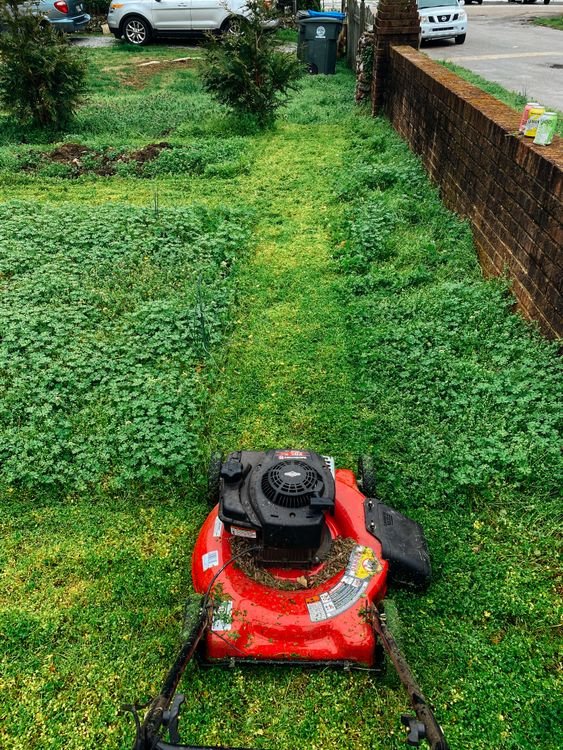
Don’t rush the first mow. Wait until grass is actively growing and is at least 3 inches tall.
First mow tips:
- Set mowing height slightly lower than your summer height for the first 1–2 mowings (this removes dead tips and debris)
- Don’t cut more than one-third of the blade height
- Bag first-mow clippings to collect winter debris
After the first mow, raise your deck to your proper mowing height for the season.
7. Repair Bare Spots
April is an excellent time to address bare spots from winter damage:
- Scratch up the soil surface with a hand cultivator or rake
- Add a thin layer of compost or topsoil if the soil looks poor
- Spread matching grass seed at the overseeding rate
- Apply starter fertilizer
- Water daily for 2–3 weeks until seedlings establish
Cool-season grass note: Early fall is actually the ideal overseeding time, but spring repairs work for bare spots—especially if you use perennial ryegrass, which germinates fast.
Warm-season grass note: Hold off on repairing warm-season grass bare spots until soil is consistently warm (60°F+), typically May or later.
8. Apply Spring Fertilizer
Cool-season grass (Fescue, Bluegrass, Ryegrass):
- Apply a light fertilizer (0.5–0.75 lb actual nitrogen per 1,000 sq ft) in April
- Use slow-release nitrogen to avoid pushing lush, disease-vulnerable growth
- Wait until grass is actively growing (not still dormant)
Following a lawn fertilizer schedule throughout the year ensures each application builds on the last rather than working against it.
Warm-season grass (Bermuda, Zoysia, St. Augustine):
- Wait until grass is at least 50% green before first fertilization (late April to May depending on location)
- Applying fertilizer too early to dormant warm-season grass wastes product
Caution: Don’t fertilize just before heavy rain—nutrients wash away and pollute waterways. Check the forecast.
9. Address Thatch if Needed
Thatch is the layer of dead organic material between soil surface and living grass. When it exceeds ½ inch, it:
- Prevents water and fertilizer from reaching the root zone
- Creates habitat for pests and disease
- Makes lawns feel spongy and uneven
How to check: Push a finger or pencil through the grass to the soil. If there’s more than ½ inch of brown, felt-like material before you hit soil, dethatching is warranted.
Dethatching in spring: Use a hand dethatching rake (small areas) or power dethatcher/vertical mower (larger areas). Best done when grass is actively growing so it recovers quickly.
After dethatching, overseed any bare spots and fertilize to speed recovery. For best results in compacted lawns, consider following the steps in a complete lawn aeration guide before you overseed.
10. Plan Your Irrigation System
Before summer heat arrives, check your irrigation system (if you have one):
- Inspect heads: Look for cracked, clogged, or tilted spray heads that would create uneven coverage
- Check coverage: Run each zone and walk the area to verify even coverage with no dry strips
- Set the controller: Program seasonal start times for early morning irrigation
- Test the rain sensor: Ensure the sensor works so the system shuts off after rain
- Inspect for leaks: Run each zone at pressure and walk the lines looking for wet spots indicating underground leaks
If you don’t have an irrigation system, map out where you’ll place sprinklers for the summer and check that your hoses and timers are in working order.
Bonus: Mark Your Calendar
Spring is a busy season. Set calendar reminders for:
- Pre-emergent application window (soil temp monitoring)
- First fertilizer application date
- Mowing start (track when grass first needs it)
- When to apply second round of crabgrass pre-emergent if using a split application (6–8 weeks after first)
Quick April Lawn Care Checklist
- Rake debris and dead grass
- Assess and document winter damage
- Sharpen mower blades
- Apply pre-emergent at right soil temp
- Soil test if needed
- First mow (when grass reaches 3 inches)
- Repair bare spots with seed
- Apply spring fertilizer (appropriately timed)
- Dethatch if thatch exceeds ½ inch
- Check irrigation system
Following this checklist gets your lawn off to the strongest possible start for the growing season. The time you invest in April pays dividends every week until fall. When bare spots need more than a quick patch, the complete walkthrough on how to overseed your lawn covers seed selection, soil prep, and establishment watering in full detail.