Best Sprinklers and Irrigation Systems for Lawns
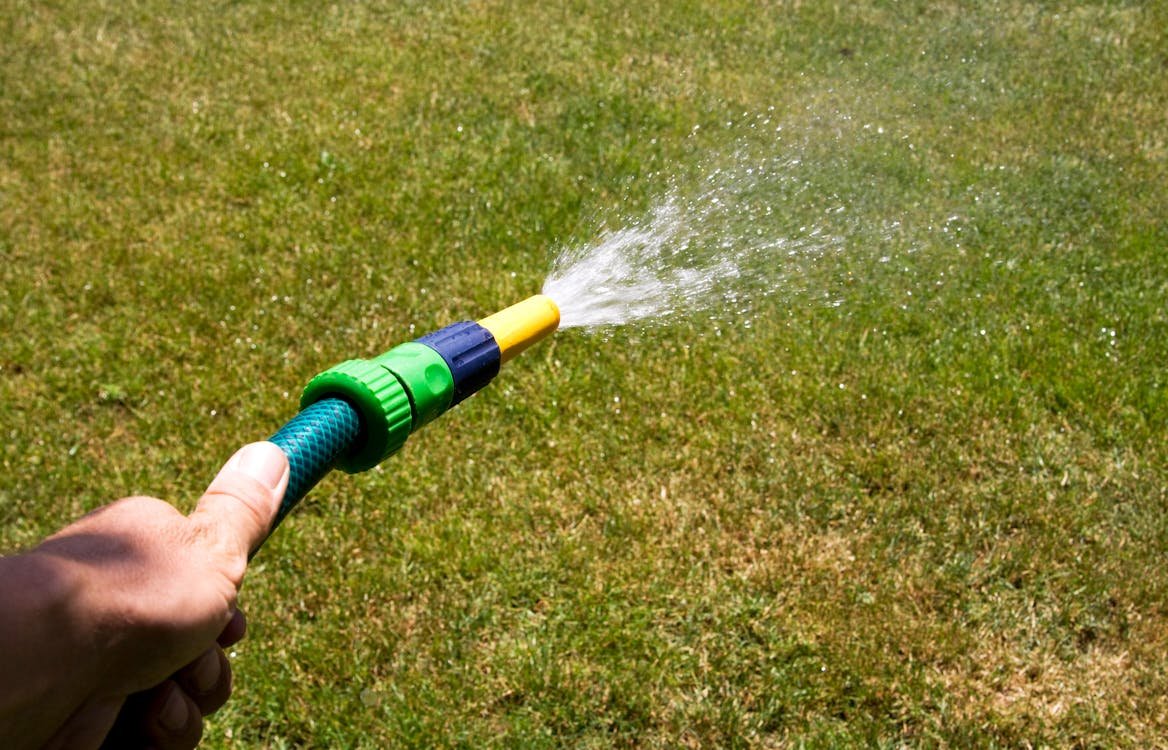
Watering your lawn efficiently means getting the right amount of water in the right places at the right times—without wasting water through runoff, evaporation, or overlapping coverage. Before choosing equipment, it’s worth reviewing the lawn watering guide to understand how much water your grass actually needs and when to apply it. With options ranging from $15 oscillating sprinklers to $3,000+ smart irrigation systems, understanding the tradeoffs helps you find the best solution for your situation.
Portable Sprinklers: Types and Best Uses
Portable sprinklers connect to your garden hose and are moved around the yard as needed. They’re inexpensive, flexible, and suitable for any yard that doesn’t justify an in-ground system.
Oscillating Sprinklers
How they work: A long arm with multiple nozzles oscillates back and forth, covering a rectangular pattern. Coverage: Up to 4,000 sq ft per unit Best for: Rectangular or square lawns; new seeding (gentle coverage); medium to large yards Cost: $15–$60 Pros: Rectangular coverage pattern is efficient; good for medium to large areas; adjustable coverage width; gentle enough for new seedlings Cons: Less efficient in wind (fine mist blows); requires repositioning to cover full yard; less uniform coverage at edges
Rotary/Impact Sprinklers
How they work: A rotating head delivers water in a circular pattern. Coverage: Up to 5,000 sq ft Best for: Large circular or irregular areas; established lawns; areas with moderate wind Cost: $15–$50 (portable); $10–$30 per head (in-ground) Pros: Covers large circular areas efficiently; less wind-drift than fine mist; adjustable arc; can be set for full or partial circle Cons: Circular pattern leaves corners uncovered; need multiple heads for rectangular yards
Traveling Sprinklers
How they work: These self-propelled sprinklers move along a garden hose following whatever path you lay the hose in. Coverage: Can cover the entire yard in one setting Best for: Large, irregularly shaped yards; users who want to set-and-forget with less repositioning Cost: $50–$130 Pros: Covers the yard path autonomously; no repositioning needed after initial setup; good for oddly shaped yards Cons: Requires long hose path setup; limited coverage width; slower than stationary sprinklers
Pulsating/Whirlybird Sprinklers
How they work: Pulsating heads throw water in a wide arc with a rapid pulsing motion; whirlybird types spin and throw water outward. Best for: Large areas; established lawns Cost: $15–$40 Pros: Good coverage for large areas; handles wind better than oscillating sprinklers Cons: Less uniform coverage than oscillating; not ideal for new seedlings
Hose-End Timers: Automating Portable Sprinklers
An inexpensive hose-end timer ($20–$60) transforms any portable sprinkler into a semi-automated system. Program specific run times and frequencies, and the timer handles turning water on and off.
Features to look for:
- Multiple daily watering programs
- Manual override capability
- Rain delay option
- Backflow protection
- Battery-powered (no wiring needed)
Best for: Homeowners who want consistent watering without buying a full in-ground system.
In-Ground Irrigation Systems
Permanently installed underground systems with pop-up sprinkler heads or drip emitters offer maximum convenience and efficiency—but at significant cost.
Standard Pop-Up Spray Head Systems
How they work: Underground pipes connect to pop-up heads that retract flush with the soil when not in use. Each “zone” of heads is controlled by a valve and timer.
Coverage: Designed for the specific yard; typically multiple zones for large areas Installation cost: $2,500–$6,000 for a professional installation on a typical residential property DIY: Possible but complex; requires planning, trenching, and plumbing knowledge Best for: Homeowners with ½+ acre lawns who want permanent, automatic watering; those who travel frequently
Pros: Fully automatic; no hose dragging; set-and-forget; can integrate with smart controllers; increases property value; allows precise zone control Cons: Expensive to install; requires annual professional winterization; heads can be damaged by mowing; needs ongoing maintenance
Rotary Nozzle Heads (MP Rotator or Hunter MP Rotator)
A modern upgrade to standard spray heads. Instead of a solid fan spray, these deliver multiple rotating streams that water more slowly and allow better soil absorption.
Benefits over standard heads: 30% more efficient; dramatically less runoff on slopes; more uniform coverage; wider effective radius
Retrofit: MP rotator nozzles can replace standard spray nozzles in existing irrigation heads—an easy upgrade that improves efficiency immediately.
Drip Irrigation
How it works: Low-volume tubing with emitters delivers water directly to plant root zones. Used primarily in garden beds, shrub borders, and vegetable gardens.
Best for: Garden beds, not lawn areas Cost: $100–$500 for DIY garden bed systems Pros: Most water-efficient; eliminates disease from wet foliage; easily automated; low maintenance Cons: Not suitable for grass; tubing must be protected from sunlight (UV damage) or buried; emitters clog if not filtered
Smart Irrigation Controllers
Upgrading to a smart controller is one of the best investments for any existing in-ground system. Smart controllers connect to local weather data and automatically adjust watering schedules based on evapotranspiration, rainfall, and soil conditions.
Popular options:
- Rachio 3: Top-rated smart controller; integrates with Alexa and Google Home; seasonal adjustment; weather intelligence. $200–$300.
- Rain Bird ST8I: Professional-grade; weather-based; soil type input. $150–$250.
- Orbit B-hyve: Budget-friendly; solid functionality; weather-skipping. $80–$150.
Water savings: Smart controllers typically reduce irrigation water use by 30–50% compared to traditional time-based controllers.
Benefits:
- Skip watering when rain occurred or is forecasted
- Adjust run times based on temperature and evaporation
- Control from anywhere via smartphone
- Leak detection (some models)
- Seasonal scheduling adjustments
Smart controllers are required by law in some drought-prone states and municipalities—and rebate programs often cover much of the cost.
Rain Sensors
An inexpensive rain sensor ($25–$75) is the minimum upgrade for any in-ground irrigation system. When rainfall accumulates above the set threshold (typically ¼ to 1 inch), the sensor interrupts the irrigation schedule.
Required by law in several states for any new irrigation system installation.
Types:
- Wireless rain sensor: Mounts to eave or fence post; wireless signal to controller
- Wired rain sensor: Reliable; requires a wire run to the controller
Comparing Irrigation Solutions
| Type | Cost | Water Efficiency | Automation | Best For |
|---|---|---|---|---|
| Oscillating sprinkler | $15–60 | Moderate | Manual (or with timer) | Small-medium yards; new seeding |
| Impact/rotary sprinkler | $15–50 | Good | Manual (or with timer) | Large areas; established lawns |
| Traveling sprinkler | $50–130 | Good | Semi-auto | Large irregular yards |
| Hose-end timer | $20–60 | Same as sprinkler | Good | Add automation to any hose setup |
| In-ground system | $2,500–6,000 | Moderate (better with upgrade) | Excellent | Large properties; convenience |
| MP Rotator heads | +$5–10/head | Excellent | With controller | Upgrade for existing systems |
| Smart controller | $80–300 | Excellent | Excellent | Reduce water use significantly |
| Drip irrigation | $100–500 | Best | Good | Garden beds; shrubs |
Watering Best Practices Regardless of System
Timing: Always water in early morning (6–10 AM). This minimizes evaporation and allows grass to dry before evening, reducing disease risk.
Deep and infrequent: 1 inch per week in 2–3 sessions is far better than daily light watering. This produces deeper roots and more drought-tolerant grass. During peak heat, the tactics in the summer lawn care tips guide show how to adapt your irrigation schedule when temperatures spike.
Watch for runoff: If water is running off before being absorbed, you’re applying too fast. Split each zone into two shorter cycles with a 20-minute soak period between them (cycle-and-soak programming).
Calibrate your system: Place straight-sided containers (tuna cans) around your lawn while running each zone. Measure how long it takes to collect ½ inch. This tells you exactly how long each zone should run.
The right irrigation solution depends on your yard size, budget, and how much automation you want. Start with a quality sprinkler and timer for a simple setup; invest in a smart in-ground system if you’re managing a large property or simply want to eliminate watering from your to-do list entirely. Good irrigation also supports recovery after core aeration — the complete lawn aeration guide explains the watering regimen needed to help grass fill in aeration holes quickly.