Summer Lawn Care Tips to Beat the Heat
Summer is the most stressful season for many lawns—particularly cool-season grasses that prefer the moderate temperatures of spring and fall. Heat, drought, heavy foot traffic, and increased pest and disease pressure all combine to challenge even well-established turf. Summer fits into a larger seasonal lawn care guide that maps the right tasks to every time of year. The right summer lawn care approach shifts from pushing growth to protecting and maintaining what you have.
Understanding Summer Lawn Stress
Grass is a living organism with temperature tolerances. When temperatures consistently exceed 85–90°F:
- Cool-season grasses (Fescue, Bluegrass, Ryegrass): Growth slows dramatically; enter summer stress mode; may go semi-dormant
- Warm-season grasses (Bermuda, Zoysia, St. Augustine): Peak growing season; need consistent moisture and nutrition to stay vibrant
Understanding which category your lawn falls into is the foundation of good summer care.
Tip 1: Raise Your Mowing Height
This is the single most impactful summer lawn care change you can make—and it costs nothing.
Raising your mowing height by ½–1 inch above your spring/fall setting provides significant benefits:
- Soil shading: Taller grass shades soil, keeping root zone temperatures 10–20°F cooler
- Moisture retention: Less soil surface exposed to sun = slower evaporation
- Deeper roots: Taller grass supports a more extensive root system that accesses moisture deeper in the soil
- Heat tolerance: Grass maintains more chlorophyll-producing surface area to support the plant
Summer heights:
- Cool-season grasses: 3.5–4 inches (up from your spring 2.5–3.5 inches)
- Bermuda: 1.5 inches (up from 1 inch)
- St. Augustine: 4 inches (up from 3–3.5 inches)
- Zoysia: 2.5 inches (up from 1.5–2 inches)
Tip 2: Water Deeply and Infrequently
Summer is the time when watering mistakes cause the most damage.
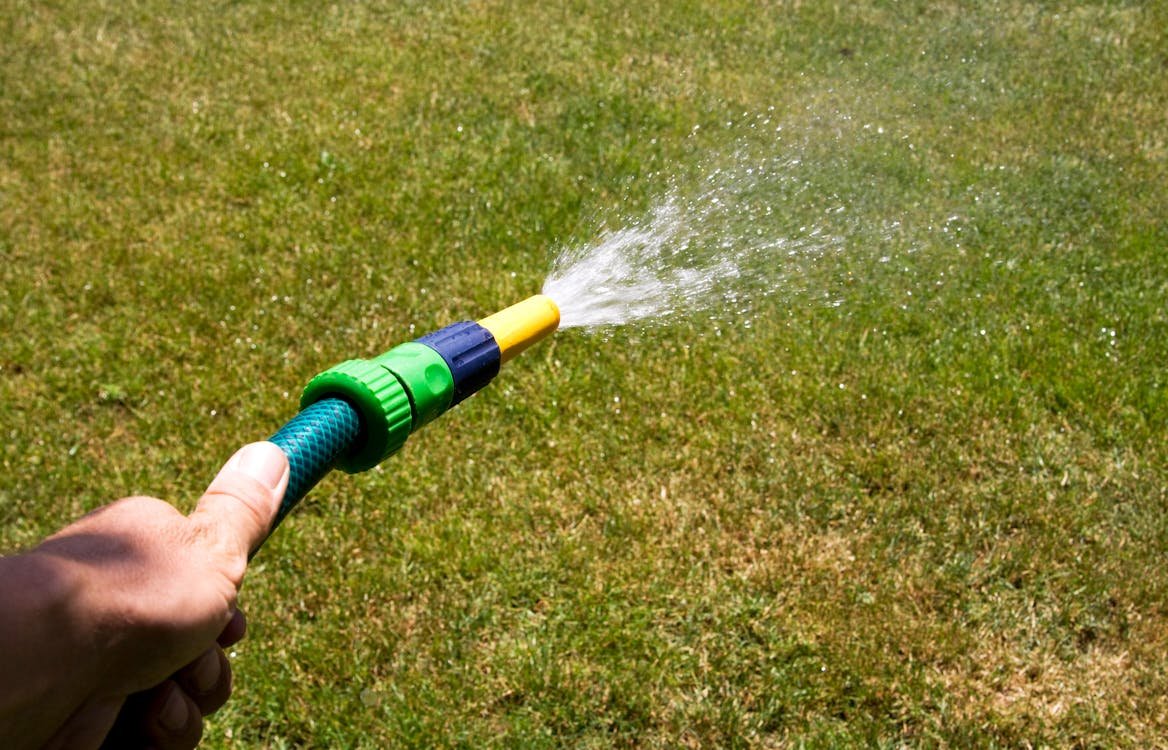
The right approach: Deep, infrequent watering (1–1.5 inches per week applied in 2–3 sessions). The full lawn watering guide explains how to calibrate run times, choose watering windows, and read stress signs.
The wrong approach: Daily light watering that wets only the top inch of soil.
Deep watering encourages roots to grow down, where soil moisture is more stable and temperatures are cooler. Light daily watering keeps roots at the surface where they’re maximally exposed to heat and drought stress.
Best watering time: 6–10 AM. Water soaks in before peak evaporation; grass blades dry during the day, reducing fungal disease risk.
Cool-season lawn strategy: Decide whether to maintain full green (1.5 inches per week in peak heat) or allow semi-dormancy (0.5 inches per week minimum to keep plants alive). Cycling between the two is worse than either consistent approach. If you’re shopping for a more efficient setup, see the comparison of the best sprinklers and irrigation systems to find equipment that makes consistent deep watering easy.
Warm-season lawn strategy: Maintain consistent irrigation; these grasses are actively growing and need regular moisture. Drought-stress Bermuda or Zoysia is still more drought-tolerant than most cool-season grasses.
Tip 3: Don’t Fertilize Cool-Season Grass in Summer
Applying nitrogen to cool-season grass in July–August is one of the more common lawn care mistakes.
Why it’s harmful:
- Nitrogen pushes new, tender growth that is highly vulnerable to heat stress and disease (particularly brown patch and dollar spot)
- Fertilized cool-season grass growing during summer stress depletes root carbohydrate reserves faster
- Applications during drought stress risk burning the lawn
Wait for fall: The single most important fertilizing window for cool-season grass is September–November. Save your fertilizer investment for then.
Warm-season grasses in summer: The opposite is true. Bermuda, Zoysia, and St. Augustine are actively growing and benefit from monthly summer fertilization (stop by mid-August in Zone 7).
Tip 4: Mow Less Frequently
As cool-season grass growth slows in summer heat, your mowing frequency should adjust accordingly. Reviewing lawn mowing tips for every season can help you dial in blade height, clipping management, and schedule.
A rigid every-7-day schedule may be right in spring and fall; in summer, cool-season grass may need mowing only every 10–14 days.
The rule: Mow when the grass needs it (grown to 50% above your target height), not on a fixed calendar schedule.
Avoid mowing in the heat of the day: If you must mow in summer heat, mow in the early morning or late afternoon/evening to reduce plant stress.
Mow dry, not wet: Summer afternoon storms make morning mowing tempting, but wet grass cuts unevenly and promotes fungal disease. Wait for grass blades to dry.
Tip 5: Scout for Pests and Disease
Summer is peak season for several common lawn problems. Catching them early makes treatment far easier.
What to watch for:
- Grubs: Large, irregular brown patches that pull up like loose carpet (roots severed); birds and wildlife digging in the lawn
- Chinch bugs: Yellowing patches starting near pavement or sidewalks, expanding outward; tiny black insects at the soil surface
- Armyworms (late summer): Rapid browning as if the grass was mowed too short; green or brown caterpillars visible at the soil surface; birds actively foraging
- Brown patch disease: Circular brown patches with a distinct “smoke ring” border; common in hot, humid weather after evening irrigation
- Dollar spot: Silver-dollar-sized bleached patches; white mycelium visible in early morning
How to scout: Walk the lawn weekly. Pay particular attention to transitions from green to brown—the edge of a problem is where you’ll find active insects or visible disease signs.
Tip 6: Keep Foot Traffic Light
Summer-stressed lawns are less resilient to physical damage than actively growing spring and fall turf.
- Redirect foot traffic: Use stepping stones or mulched pathways for regular routes across the lawn
- Avoid parking on stressed grass: Vehicle weight on drought-stressed turf crushes and kills grass crowns
- Minimize activities on brown/dormant cool-season lawns: Dormant grass can survive drought but is more vulnerable to physical damage
Tip 7: Skip the Lawn Projects in Peak Heat
Summer is not the time for major lawn projects:
- Don’t aerate: Wait until fall (cool-season) or late spring (warm-season) for this
- Don’t overseed cool-season grass: Seedlings won’t survive summer heat; wait until late August–September
- Don’t apply herbicides on stressed grass: High-heat herbicide applications risk severe turf damage
- Don’t topdress: Wait until fall
Exception: Spot treatment of weeds on warm-season grass can continue through summer since these grasses are actively growing.
Tip 8: Sharpen Mower Blades Mid-Season
Your mower blade started spring sharp but has been working hard. Mid-season (late June or early July) is a good time to resharpen.
Signs your blade needs sharpening: brown, frayed grass tips 1–2 days after mowing; lawn looks dull rather than bright green after mowing.
A sharp blade makes a cleaner cut that reduces water loss and disease entry.
Tip 9: Allow Summer Dormancy if Needed
Cool-season grasses are engineered by evolution to survive summer drought by going dormant. If irrigation is limited or water costs are a concern, allowing your cool-season lawn to go semi-dormant is a valid and often smart choice.
Dormancy management:
- Apply ½ inch of water per week minimum to keep grass crowns alive (not enough to break dormancy, just enough to prevent death)
- Avoid all foot traffic on dormant grass
- Don’t mow dormant grass unless it’s actively growing
- Don’t fertilize dormant grass
- Expect recovery when fall temperatures arrive
Grass can survive 4–6 weeks of dormancy without irrigation damage under normal conditions. Extended dormancy beyond this may kill plants—particularly in heat above 90°F.
Quick Summer Lawn Care Checklist
Cool-season grass (Fescue, Bluegrass, Ryegrass):
- Raise mowing height to 3.5–4 inches
- Water 1–1.5 inches per week in 2–3 deep sessions (or allow dormancy at 0.5 in/week)
- Skip nitrogen fertilizer; wait for fall
- Mow every 10–14 days as needed
- Scout for pests weekly
Warm-season grass (Bermuda, Zoysia, St. Augustine):
- Maintain consistent irrigation (1–1.5 inches per week)
- Fertilize monthly (stop by August 15–31 in cooler zones)
- Mow every 7–10 days
- Apply grub control if needed (imidacloprid by June for best results)
- Watch for chinch bugs, especially near pavement
Summer lawn care is about protection and patience. Your lawn will bounce back beautifully in fall if you protect it through summer’s stress. The worst thing you can do is push growth through heat stress—mow correctly, water deeply, and let your lawn do what it’s designed to do.